Checking trailer lights alone is awkward. The controls are in the vehicle, but the lights you need to see are behind the trailer. Troubleshooting adds another question: is the fault in the trailer, the tow vehicle, or the connection between them?
A battery-powered trailer tester lets you work on the trailer side independently. The Lone Wolf adds voltage and current readings, so you can see whether an active circuit is drawing power while you inspect the lights.
First, choose the right kind of tester
The phrase “trailer tester” covers two different jobs. A small tester that plugs into the vehicle's socket checks the signals coming from the tow vehicle. It does not power the lights on a disconnected trailer. CURT's explanation of connector testers describes that vehicle-side check.
The Lone Wolf works from the other end: it supplies power to the trailer. That lets you check lighting circuits without the tow vehicle providing the power. The distinction matters when buying a tester, and when interpreting the result. Neither test, on its own, proves that the complete vehicle-and-trailer combination is ready to tow.
What the Lone Wolf provides
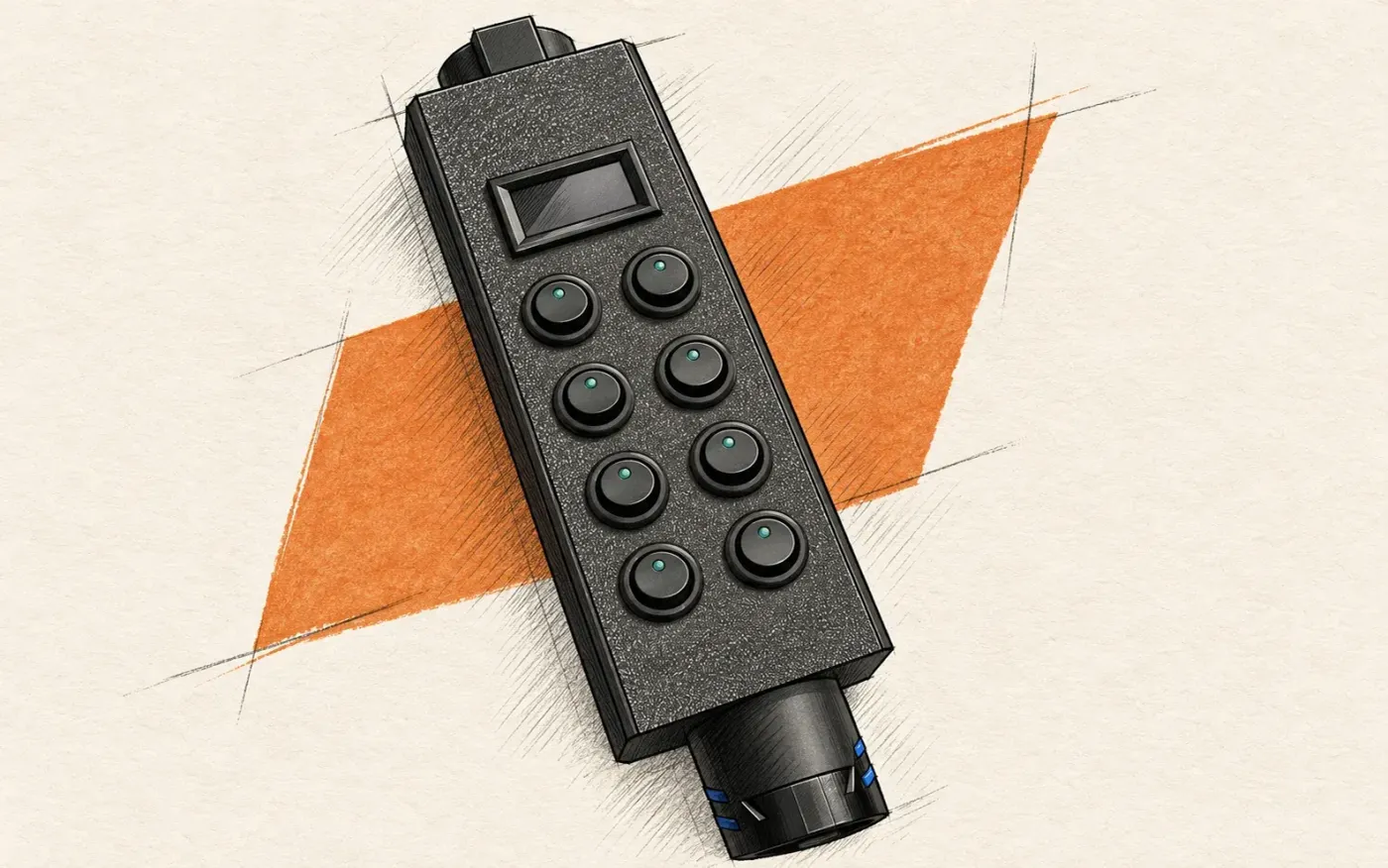
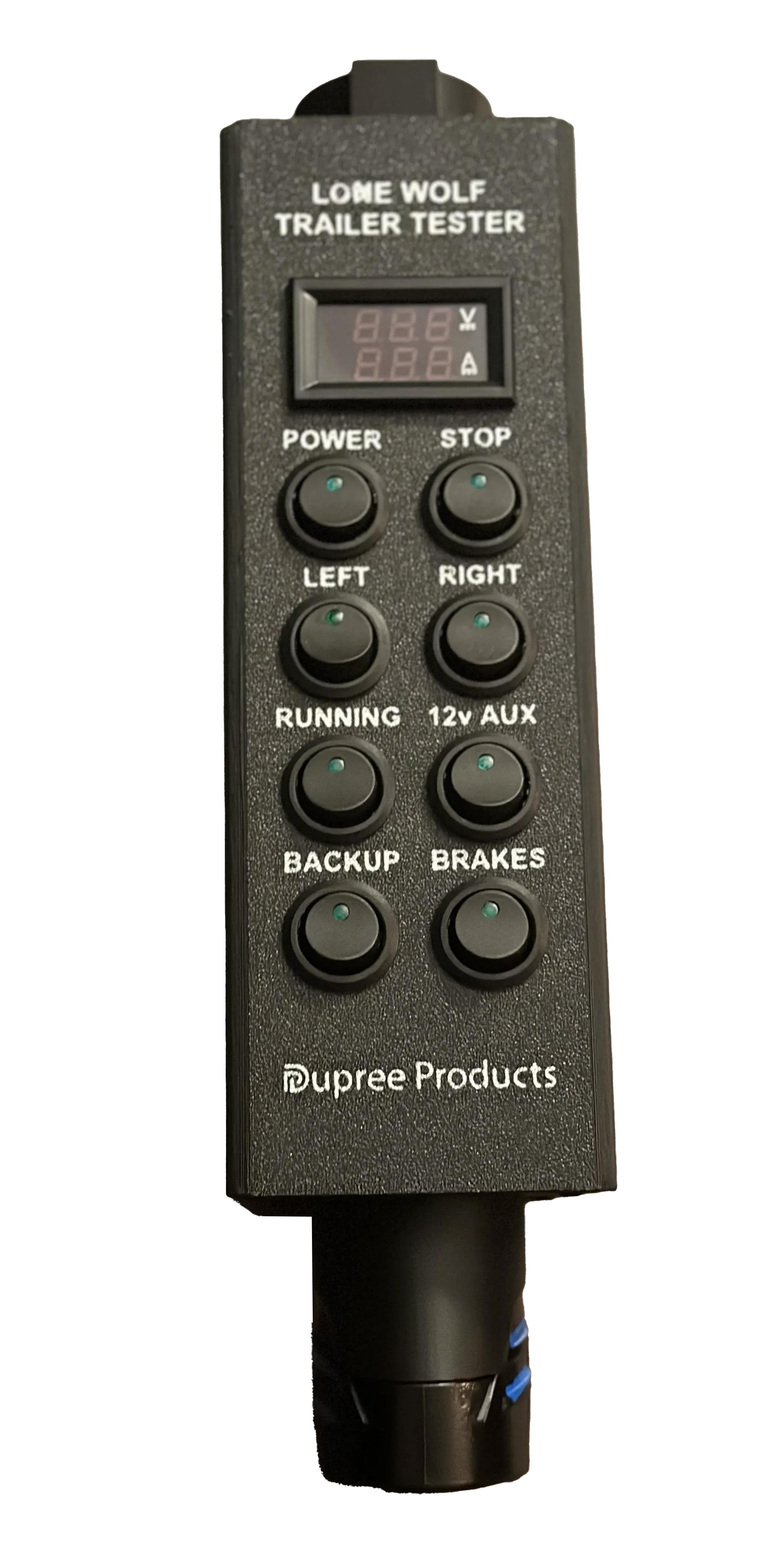
The tester has individual circuit controls, a display for battery voltage and current on active circuits, and auto-resetting circuit protection. It uses a Milwaukee M12-compatible battery, which is not included. The product photos show a 7-way RV-blade socket. Confirm that your trailer's connector and wiring are compatible; do not assume every connector described as “7-pin” is the same.
The display is the useful extra. Instead of only seeing that a switch is on, you can see that the connected circuit is drawing current. You still walk around and look at the lights. The display supplements that inspection; it does not replace it.
A practical trailer-light check
This is a lighting-check workflow, not a pinout or brake-system service procedure. Follow the tester and trailer instructions for your setup. If you are unsure about an adapter, circuit rating, or a trailer with its own connected power source, ask Dupree before proceeding.
- Secure the trailer. Work with it stationary on firm, level ground, properly supported and chocked against movement. Do not rely on an electrical brake test to hold it still.
- Inspect the connector first. With power off, look for corrosion, damaged contacts, loose connections, and damaged cable. Do not force a mismatched plug.
- Set up the tester with its controls off. Disconnect the trailer's electrical plug from the tow vehicle. Fit a charged compatible battery and connect the trailer to the tester as directed by the manufacturer. This check does not require unhitching the trailer.
- Check one lighting circuit at a time. Use the labeled controls for the lighting circuit you are checking. Walk around the trailer and verify which lamps illuminate. Check running and marker lights, left and right lighting circuits, and stop lights as appropriate to the trailer's wiring. Check reverse lamps if fitted and supported.
- Watch the display and the lamps together. Note the voltage and current with that circuit active. Look for a dark lamp, the wrong lamp illuminating, or behavior that changes when another lighting circuit is selected. A number on the display is not a pass/fail verdict.
- Finish with the tow vehicle connected. Turn the tester off before disconnecting it. Reconnect the trailer normally and verify the vehicle actually operates the running lights, left and right turn signals, hazards, and brake lights. A phone recording from a safely positioned location can help a solo owner inspect the rear lights; it is not a substitute for checking lamps outside the camera's view.
The final vehicle-connected check is important: it tests the combination you will use on the road, including the vehicle's actual flashing and braking signals. CURT's trailer hookup checklist includes this final lighting check.
How to interpret volts and amps
Voltage and current answer different questions. The voltage reading gives you information about the tester's battery supply. The current reading shows electrical draw with the selected circuit active. Neither tells you, by itself, that every lamp is working or that voltage is adequate all the way at the rear of the trailer.
- A dark lamp and little or no indicated current: check the supply, connector, ground path, wiring, and lamp. A broken connection is one possibility, not a diagnosis you can make from the display alone.
- Current is present, but a lamp is dark: another lamp or load on that circuit may account for the reading. Inspect each lamp instead of treating any current draw as success.
- A different reading than another trailer: that may be normal. Lamp type, quantity, and voltage affect current. There is no single “correct amps” figure for every trailer.
For basic faults, checking damaged lamps, connections, and the ground path is a sensible starting point. CURT's lighting troubleshooting guide covers those checks. Switch power off before cleaning, disconnecting, or repairing wiring.
What this check does not prove
A successful trailer-side light check does not clear the tow vehicle's socket, fuses, wiring, or brake controller. It also does not rule out an intermittent fault that only appears with vibration or a different load.
Brake lights and electric trailer brakes are separate jobs. This guide covers the lights. Seeing electrical current on a brake circuit would not establish mechanical braking performance, adjustment, or the condition of a breakaway system. Follow the brake manufacturer's inspection procedure or have a qualified shop check it.
Likewise, auto-resetting protection is not permission to keep energizing a fault. If power cuts out repeatedly, a connection gets hot, or anything smells wrong, switch off and investigate. Do not bypass the protection.
When a standalone tester makes sense
This approach is useful when you maintain trailers away from a tow vehicle, check several trailers, or want to narrow down a lighting problem before involving the vehicle's wiring. It lets one person control the test and inspect the result.
If you only need to check a vehicle's socket, a vehicle-side connector tester serves a different, simpler purpose. If you just want to check an already connected trailer's lights before a trip, a helper or a carefully positioned camera may be enough. A standalone tester earns its place when independent trailer-side testing is the job.
Product details and where to buy
Disclosure: Dupree Products manufactures this tester and shares ownership with GoodKit.
Lone Wolf Trailer Tester at Dupree Products
Check the current listing for price and availability. A compatible M12 battery is required and sold separately. Confirm load limits and any adapter requirements with Dupree for your particular trailer.
More practical electrical projects: browse GoodKit's guides and electrical articles.
We make the Lone Wolf at Dupree Products. The focus here is checking trailer lighting circuits and understanding what voltage and current readings can—and cannot—tell you.