Wera makes great tools. This one has problems.
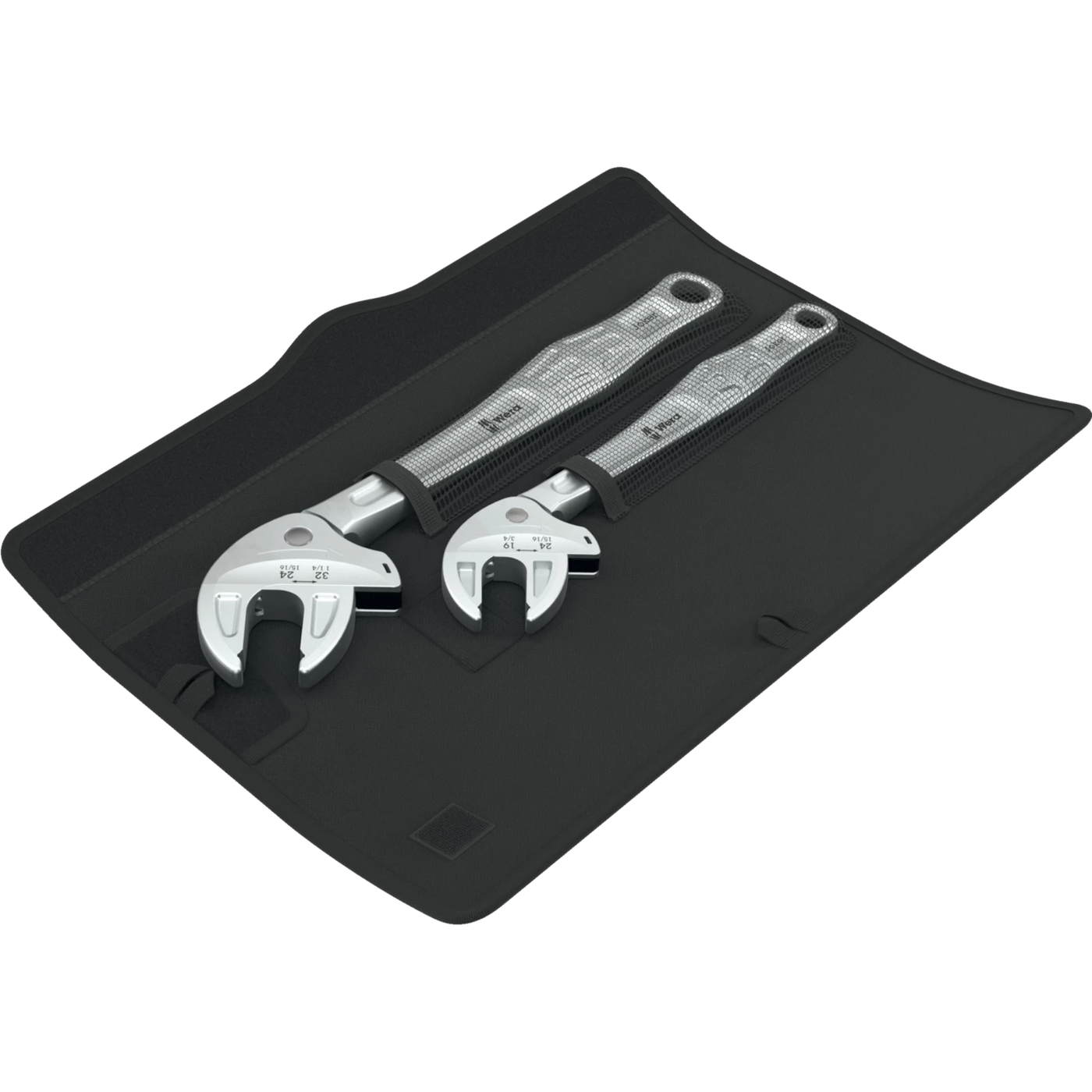
We like a lot of Wera’s design work, but our experience is not uniformly positive: the Zyklop set earned a mixed verdict after its ratchet failed. The 6004 Joker self-setting wrench disappointed us in a different way.
Which Joker? We mean the 6004 self-setting wrench, with moving jaws that fit a range of fastener sizes—not Wera’s fixed-size Joker combination wrenches. The criticism here should not be applied to the whole Joker family.
On paper it solves a real problem: the jaw adjusts to the fastener and lets you work back and forth without a thumb wheel. In our use, it did not deliver where we most needed it.
Where it falls short
We wanted the self-setting wrench to help with tight spaces, awkward angles and fasteners that were difficult to see. Those are the situations where it disappointed us.
It slips off. The self-setting jaw doesn't grip like a real wrench. At an odd angle or under real torque, it lets go — not every time, but enough to lose your trust.
The return angle matters. Wera specifies a 30-degree return angle for the 6004’s jaw-based ratcheting action. This is not the fine-toothed mechanism of a socket ratchet. In the cramped spots where we used it, we often did not have enough room for that return movement.
It's harder than finding the right wrench. After wrestling with it in a few difficult spots, we kept putting it down and digging out a standard combination wrench or a crow's foot. Faster, more reliable, less frustration.
Where it works fine
On easy-access fasteners with room to swing, it is a nice tool. The finish and feel are good, and the self-setting jaw is clever. Our objection is its usefulness in the awkward spaces where we expected it to earn its place.
The bottom line
- We love Wera tools generally
- Self-setting concept is genuinely clever
- Classic Wera build quality
- Slips in tight spaces
- Ratcheting arc is too wide
- More trouble than a standard wrench when it matters
A great idea that doesn't survive contact with the situations where you actually need it. In easy spots it's a nice wrench; in hard spots it slips, can't complete its arc, and costs you more time than a traditional wrench. It's been relegated to novelty status in our toolbox. We wanted to love it. We can't recommend it.
Check the options
We do not recommend the self-setting Joker for tight-space work, but the current price and conventional alternatives are here for comparison.
Affiliate disclosure: As an Amazon Associate I earn from qualifying purchases.
A conventional alternative we actually use
For engine maintenance aboard, our NEIKO 03575A metric combination wrenches have held up well, including to corrosion. These are conventional open-end/12-point box-end wrenches, not self-adjusting or ratcheting substitutes for every Joker function.
Need a smaller ratchet instead?
For small screws and sockets rather than an adjustable wrench, our Tool-Check Plus review explains where its tiny ratchet genuinely helps—and why its holder still frustrates us. It is a different tool for a different job, not a direct Joker replacement.