A Dinghy Light That Earns Its Spot
We have run a Show Me Your Dinghy light for a full season now, and it has quietly become one of those pieces of gear we would replace the same day if we lost it. It is a small, solar-powered, all-around LED light built to make your dinghy visible at anchor and underway — and unlike most of the disposable marine electronics we have owned, this one is built to survive the abuse a tender actually takes.
We have the white sealed manual model. Here is what a season of real use taught us.
You Can Actually Turn It Off
That sounds convenient until the dinghy is hanging from the davits while you are anchored or sailing at night. With the boat’s proper anchor or navigation lights already operating, you want the dinghy light off—not glowing alongside them and creating an unnecessary or confusing extra light.
The sealed manual version gives you a simple on/off control. You decide when it is lit. For us that flexibility is the entire reason to choose this one over the automatic version — on for the night, off when we do not want it, no fuss.
The Sealed Touch Button Is the Whole Point
The on/off control is a sealed, touch-sensitive “button.” There is no mechanical switch poking through the housing, which means no gap for water to work its way into and no moving part to corrode shut. On a piece of gear that lives outdoors in salt air and spray, that matters more than almost anything else.
A traditional toggle or rubber-boot switch is usually the first thing to die on marine electronics. Eliminating it entirely is the right call, and after a full season of daily use ours actuates exactly like it did on day one. We expect this to outlast everything else on the dinghy.
Solar-Powered, Set and Forget
The light charges itself from a small solar panel, so there is nothing to plug in and no charging routine to remember. We mounted it on the dinghy and it has kept itself topped up ever since.
The practical result is the only spec that matters: it has worked every single time we have needed it at night. No wiring, no battery swaps, no dead light when it counts.
We Dropped It Overboard. It Did Not Care.
The real test was unplanned. One night it came off and went to the bottom in about 15 feet of water. The next morning we dove down and brought it back up. It still works perfectly — a full night fully submerged on the seabed, and it came up exactly as it went down.
Show Me Your Dinghy rates these as fully waterproof to roughly 30 feet and crush proof, and now we believe it. For something that lives on a boat that flips, swamps, and gets dropped, “survives a night underwater” is the durability claim that actually counts.
One Is Not Enough
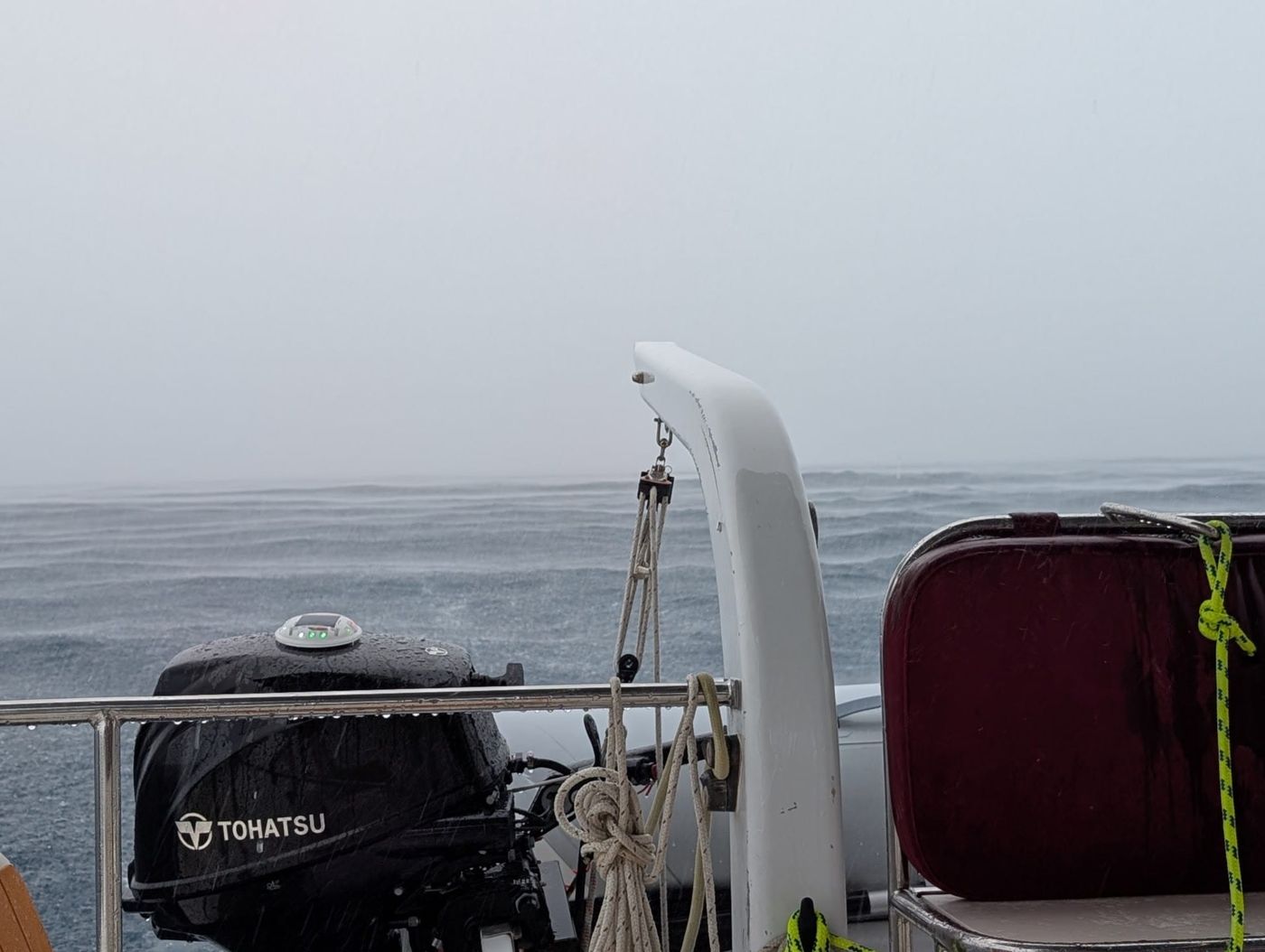
Right now we have ours Velcro’d to the outboard cowling. The unit has proper mounting holes if you want to bolt it down, but Velcro has held fine all season and makes it easy to move or bring inside. It works great — but one light is not really enough once you see how useful it is.
Our plan from here:
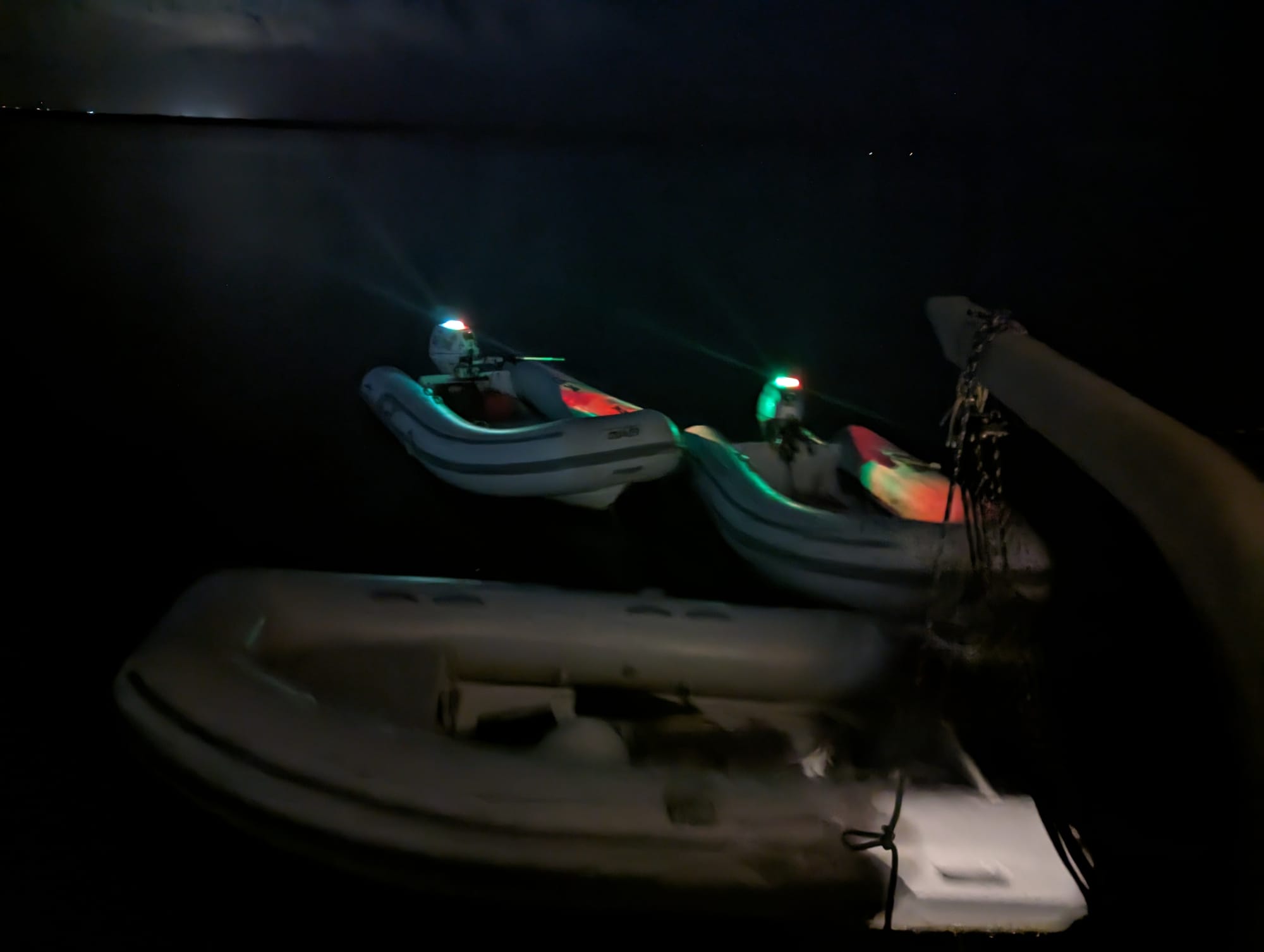
- A second one for the bow of the dinghy — better visibility from more angles, whether we are underway or tied up in a crowded anchorage.
- A red unit for the cockpit on night passages — red light preserves your night vision, so you can move around and read instruments without ruining your eyes for the dark. Show Me Your Dinghy makes red and red/green sealed manual versions, and the white pairs with a red/green split unit for a proper all-around nav light setup.
Shop the red and split-unit options
What It Costs
The white sealed manual model runs about $60. The automatic photocell versions are a bit less (around $40) if you would rather have the dusk-to-dawn behavior and do not care about manual control. They come in white, red, green, blue, tri-color, and red/green, so you can match the light to its job — all-around white for visibility, red or green for channel marking and night use.
For the money, a single light that is solar-powered, sealed, crush proof, and genuinely waterproof is a bargain next to the rechargeable lights we have killed in a season or two.
Check prices at Show Me Your Dinghy
The Bottom Line
- A full season on the outboard
- Spent an accidental night on the seabed in 15 feet of water — still works perfectly
- You’ll want a second (and a red one) once you see how useful it is
A full season in, one accidental night on the seabed, and ours still works like new. The manual on/off control is the feature that sets it apart, the sealed touch button should last for years, and the solar power means we never think about it. We are buying more — and that is the highest recommendation we give. Highly recommend.