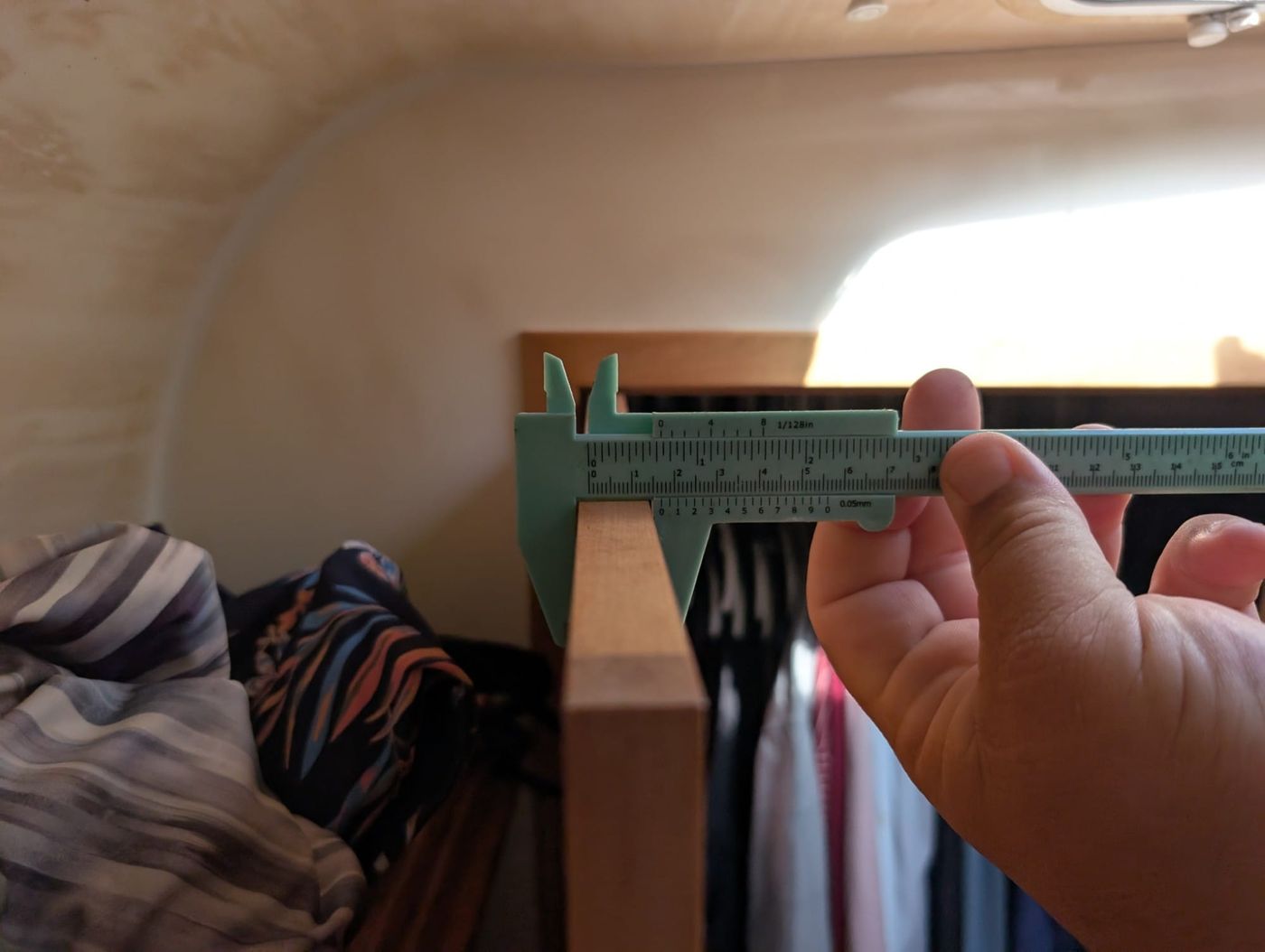
We're always reaching for calipers, and almost never for the precision a machinist set offers. We don't need a thousandth of an inch — we need to know roughly what size something is, right now, without hunting down the good tool or worrying about wrecking it. That's exactly what these cheap plastic calipers are for, and they've quietly become one of the most-used tools on the boat.
Cheap and rust-proof is the whole point
A nice stainless caliper is a precision instrument you baby: keep it dry, keep it in its case, don't drop it. On a boat, "keep it dry" is a losing battle, and a steel caliper left in a damp locker turns into a rusty paperweight. These are plastic. They don't rust, they weigh nothing, and they cost so little that dropping one over the side is a shrug, not a tragedy. So we leave them wherever we actually use them instead of locking them away.
What we actually measure
This is the "what size is that?" tool:
- Shower door glass thickness
- Line diameter — matching new line or sizing a block or clutch
- Cable and wire sizes
- Screw, bolt, and nut diameters
- Hoses, fittings, dowels, drill bits — anything where "about this big" isn't good enough but machinist-exact is overkill
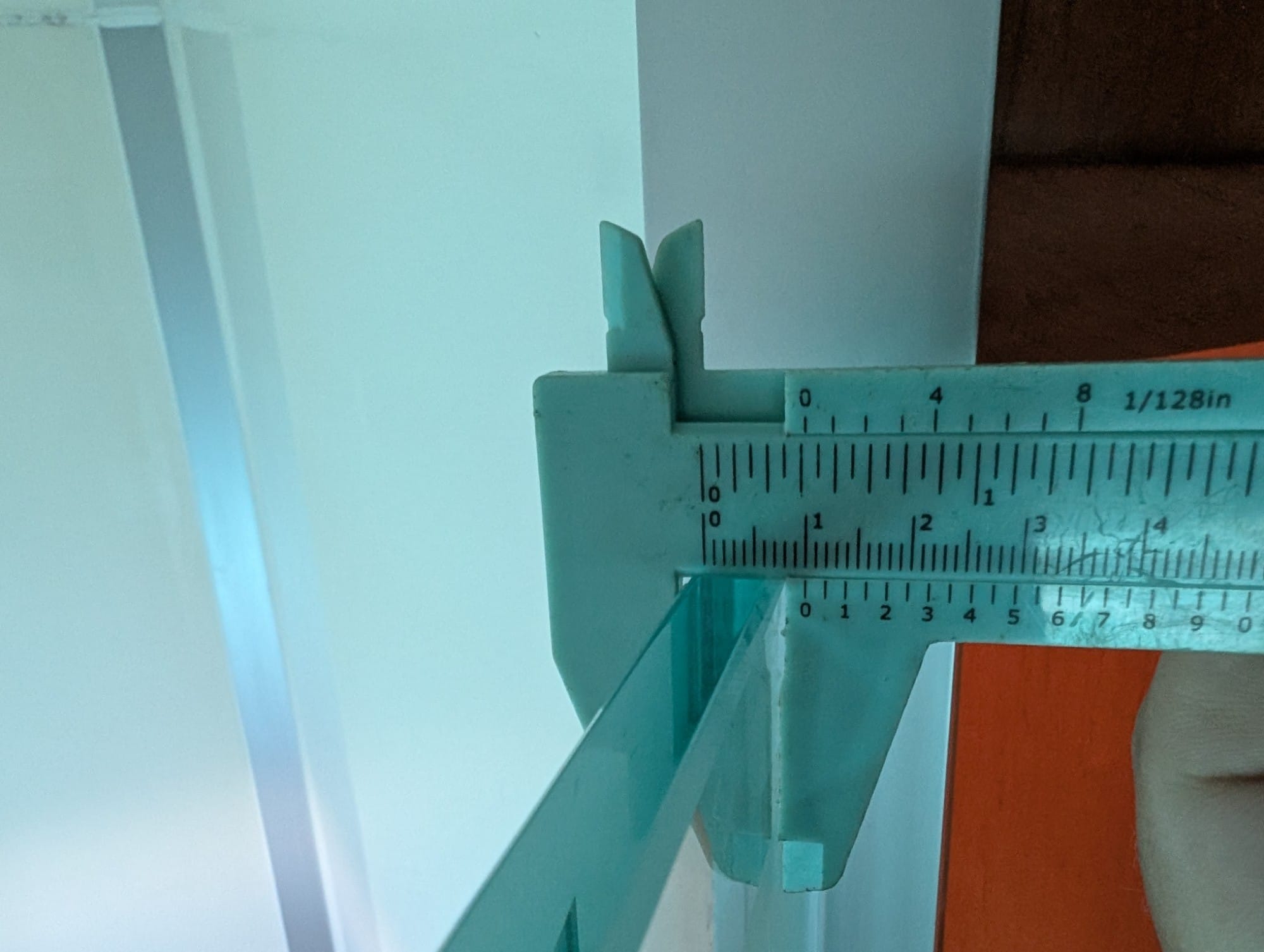
About the accuracy
These will not get you micrometer accuracy. They read to about half a millimeter and the jaws have a little play — a rough-and-ready tool, not a precision instrument. If your work genuinely needs tight tolerances, buy a real steel caliper and baby it. But most measuring isn't that. Most of the time you need to know whether that line is 12mm or 14mm, that screw an M5 or an M6. For that, half a millimeter is plenty, and these answer in two seconds.
The bottom line
Everyone should have calipers, and for most people most of the time, the right set is a cheap plastic one you don't have to think about. Rust-proof, light, accurate enough, cheap enough to keep a few around. Buy a couple and stash them where you actually measure things.
- Never rust — live happily in a boat toolbag
- Cost almost nothing
- Accurate enough for the everyday “what size is that?”
- Not machinist precision — that’s the point